Chain Link Fence Installation in Northwest Arkansas: The Complete Guide
In Northwest Arkansas, a chain link fence is only as strong as its anchor in the Ozark rock. Whether you're securing a backyard in Fayetteville or a commercial lot in Bentonville, a professional chain link fence installation must account for our region's challenging terrain. You want a secure boundary for your pets and property, but the reality of rocky soil often makes DIY projects nearly impossible to complete correctly.
It's common to feel concerned about a fence sagging or leaning over time, especially with the shifting elevations found across NWA. We also know that local permit requirements in cities like Rogers can be confusing for many homeowners. This guide provides the professional standards for a durable, secure, and cost-effective fencing solution tailored specifically for our local landscape and community needs.
You'll gain a clear understanding of the different coating and privacy options that improve both durability and curb appeal. We also walk you through the professional installation process and timeline so you know exactly what to expect. Let's look at how to create a permanent boundary that offers lasting value and peace of mind for your property.
Key Takeaways
- Learn why galvanized and LLDPE-coated steel remains the top choice for secure pet containment and commercial boundaries in Northwest Arkansas.
- Understand how wire gauge and framework components like top rails and terminal posts determine the overall strength and longevity of your structure.
- Discover the specialized techniques used during professional chain link fence installation to navigate the region's notorious rocky soil and heavy clay.
- Explore customization options including privacy slats and gate configurations that balance security with functional wind resistance.
- Evaluate the long-term benefits of professional craftsmanship, including local warranties and the avoidance of common DIY pitfalls in Ozark terrain.
Table of Contents
- The Essentials of Chain Link Fence Installation in Northwest Arkansas
- Understanding the Components: More Than Just Metal Mesh
- The Professional Installation Process: Overcoming the Ozark Factor
- Customizing Your Fence: Privacy, Security, and Style
- Why Professional Installation Outperforms DIY in the Ozarks
The Essentials of Chain Link Fence Installation in Northwest Arkansas
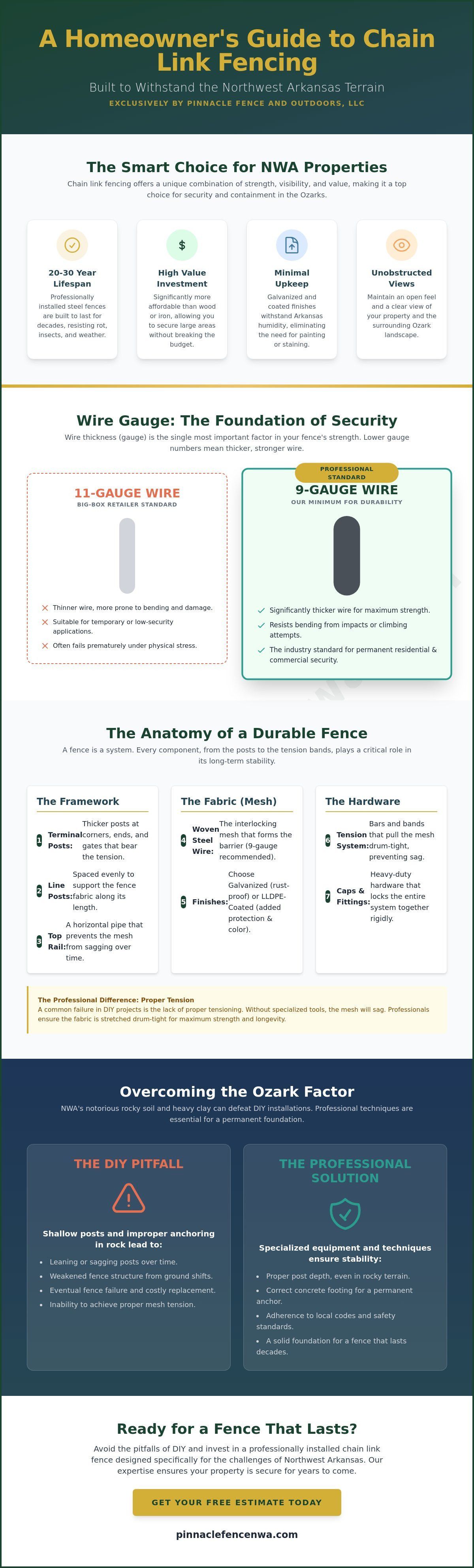
A chain-link fence consists of a series of woven steel wires, typically galvanized or coated in LLDPE (Linear Low-Density Polyethylene). This construction provides a flexible yet incredibly strong barrier. For property owners in Northwest Arkansas, choosing this material often comes down to its proven track record. When you opt for professional chain link fence installation, you're securing a structure designed to last between 20 and 30 years. It remains the primary choice for local pet owners and business managers who need dependable security without a massive price tag.
Preparation starts long before the first post is set. Identifying property lines is vital, as even a small encroachment can lead to expensive legal issues. We also look for existing easements that might restrict where a fence can stand. Safety is the highest priority. In our state, calling Arkansas 811 to mark underground utility lines is a mandatory step. Professional contractors manage these details to protect your property and ensure the installation remains compliant with local safety standards.
Why NWA Homeowners Choose Chain Link
Cost-effectiveness is a major driver for local residents. In the 2026 market, chain link remains significantly more affordable than wood or ornamental iron. It allows you to fence a large backyard without exhausting your budget. Beyond the price, many homeowners appreciate the visibility. It provides a clear view of the Ozark landscape, allowing you to monitor pets or children without feeling boxed in. The maintenance requirements are also very low. The steel components are treated to withstand Arkansas's high humidity and seasonal temperature swings, so you won't need to worry about staining or painting.
Local Regulations and Permits
Understanding city-specific rules is essential to avoid fines. In Fayetteville, you don't need a permit for fences seven feet tall or less, though the maximum height is generally eight feet. Bentonville is stricter; most new fences require a permit and a $30 fee. Front yard fences in Bentonville cannot exceed 48 inches in height. Rogers and Springdale have their own setback rules, particularly for corner lots where visibility is a safety concern. A professional site survey helps identify these constraints early. This ensures your chain link fence installation is positioned correctly from day one.
Understanding the Components: More Than Just Metal Mesh
Most property owners focus on the wire mesh when they think about a fence. However, a professional chain link fence installation relies on a complex system of engineered parts working together. The framework serves as the skeleton of the structure. This includes terminal posts, which are the thicker posts at corners and ends, and line posts that support the fabric at regular intervals. A top rail runs across the entire length to prevent the mesh from collapsing or bending under pressure.
The hardware and fittings are what truly differentiate a professional build from a weekend project. Tension bars and bands are essential for maintaining a tight, secure surface. A common failure in DIY projects is the lack of proper tensioning. Without specialized tools to pull the mesh drum-tight, the fabric will eventually sag and pull away from the posts. Installers use heavy-duty rail caps and brace bands to lock every component into place, ensuring the entire system remains rigid against wind and physical impact. If you want to see how these components look on a finished project, you can view our recent local installations for inspiration.
Choosing the Right Gauge and Mesh Size
Wire thickness is measured by gauge. Lower numbers indicate a thicker, stronger wire. While 11-gauge wire is often sold at big-box retailers for temporary use, 9-gauge is the industry standard for durability in 2026. This thicker wire resists bending and provides a much higher level of security for residential and commercial properties. For specialized needs, small-mesh options are available. These "no-climb" designs use smaller openings that make it impossible for intruders to gain a foothold or for small pets to get stuck in the wire.
Vinyl Coated vs. Galvanized Finishes
The finish you choose affects both the look and the lifespan of your fence. Galvanized steel is the traditional choice; it's dipped in zinc to provide excellent rust resistance in the high-moisture valley areas of Northwest Arkansas. For a more modern aesthetic, vinyl-coated options are now the preferred choice for many homeowners. Black vinyl coating is particularly effective on wooded lots in the Ozarks. It tends to disappear into the shadows of trees and brush, providing security without creating a harsh visual barrier. This coating also adds a second layer of protection against the elements, extending the life of the steel beneath it.
The Professional Installation Process: Overcoming the Ozark Factor
Precision layout is the first step of any successful chain link fence installation. We begin by staking out terminal posts, which include corners, ends, and gate openings. A high-tension string line guides the placement of line posts between these points. This ensures the fence follows a perfectly straight path or a smooth curve according to your property lines. This phase requires a sharp eye, as even a small misalignment at the start becomes a glaring error once the fabric is stretched.
Once the layout is confirmed, the physical labor begins. In Northwest Arkansas, this is where most DIY projects stall. Our region is famous for flint-heavy ground and dense limestone layers. Manual post-hole diggers or lightweight gas augers often bounce off these rocks, leaving holes too shallow for stability. Professional crews use heavy-duty equipment to ensure every post is anchored correctly. After the posts are set in concrete and cured, we assemble the framework. This involves installing top rails and tension wires that give the fence its structural integrity. Then comes the most critical phase: stretching the fabric and the final tie-in.
Setting Posts in Rocky NWA Soil
In cities like Fayetteville and Bella Vista, the ground is rarely cooperative. We use hydraulic rock drills and specialized equipment to penetrate the flint and limestone that sit just inches below the surface. Every post must be set at a sufficient depth to ensure stability through our wet winters and dry summers. Professional installers set posts in wet-mixed concrete to create a heavy, immovable anchor. This prevents the fence from leaning when the ground softens during the spring rains. It's the only way to ensure the perimeter stays upright in our unique terrain.
The Science of Tensioning
A loose fence is a failing fence. We use mechanical stretchers and "come-alongs" to pull the wire mesh until it's drum-tight. Hand-stretched DIY fences often look fine initially, but they usually sag within the first 18 months as the wire settles. A professionally tensioned chain link fence installation stays rigid for decades. We also prioritize the bottom tension wire. This addition prevents pets from pushing the bottom of the mesh outward. It's a small detail that provides massive peace of mind for dog owners across the Ozarks.
Customizing Your Fence: Privacy, Security, and Style
A professional chain link fence installation offers more than just a basic metal boundary. You can customize the structure to meet specific privacy and security goals. While the base framework provides the foundation, the additions you choose will define how the fence performs over the next few decades. For commercial projects in Northwest Arkansas, security is often the primary driver. Adding three-strand barbed wire or razor wire to the top of a 6-foot or 8-foot fence creates a formidable deterrent for industrial sites or storage yards. These upgrades are essential for protecting high-value assets in our growing business corridors.
Residential owners typically prioritize privacy and ease of access. Modern slats and automated systems have transformed chain link from a purely functional choice into a sophisticated property solution. In 2026, we see a growing trend toward integrating smart technology directly into the perimeter. This allows property owners to monitor and control their gates from a smartphone, providing peace of mind whether they are at home or away. This level of control is a significant step forward for local homeowners who value both security and convenience.
Privacy Slats and Windscreens
Choosing between winged and flat slats depends on your desired level of seclusion. Winged slats include extra "wings" that fill the gaps in the mesh more effectively, providing up to 90% privacy. If you're managing a temporary construction site in Lowell, privacy mesh or windscreens are often the better choice. These provide a clean, professional look while keeping equipment out of sight. It's vital to remember that slats turn the fence into a sail. Professional installers must reinforce the posts or use a heavier gauge steel to handle the increased wind load common in the Ozark hills. Without this reinforcement, a strong storm can cause the entire structure to lean or buckle.
Gate Systems and Automation
Your gate is the most frequently used part of the fence, so its design is crucial. Single walk-gates are standard for foot traffic, but rural properties in Benton County often require wider double drive-gates or cantilever sliders for vehicle access. Cantilever gates are particularly useful because they slide parallel to the fence line, which is ideal for properties with steep driveways where a swing gate wouldn't function. For modern estates, Gate Automation Northwest Arkansas provides a seamless way to manage property access. These systems use reliable motors and encrypted access controls to ensure only authorized individuals enter your land. If you're ready to design a custom boundary that fits your specific needs, request a professional quote to get started on your project.
Why Professional Installation Outperforms DIY in the Ozarks
Attempting a DIY project in our region often leads to unexpected frustration. While retail stores suggest anyone can handle a chain link fence installation, they rarely mention the specialized tools required for our local terrain. You'll likely spend hundreds on hydraulic rock drills and tensioning equipment that you'll only use once. Mistakes in layout or stretching can lead to wasted materials, which quickly erases any perceived savings. Beyond the financial cost, there's the risk of physical injury and property liability. Professional crews carry insurance that protects you from these risks, providing a layer of security that a solo weekend project cannot offer.
Longevity is the most significant benefit of a professional build. As we discussed in previous sections, the Ozark soil and high humidity demand specific anchoring and coating standards. A fence that isn't professionally stretched will sag under the weight of NWA's seasonal storms or the pressure of active pets. When you hire a specialist, you receive a one-year craftsmanship warranty. This guarantee ensures your boundary stays tight, level, and secure for decades. It's an investment in your property's value and your own peace of mind.
Equipment and Expertise
Professional installers have access to commercial-grade materials that you simply won't find in local big-box stores. These components include thicker gauge wire and more robust fittings designed for long-term durability. Navigating the unique slopes and hills of Northwest Arkansas requires a level of precision that only comes with years of field experience. We ensure every post is plumb and every line is level, even on the most challenging Ozark inclines. This expertise results in a clean, professional appearance that enhances your property's curb appeal rather than detracting from it.
The Pinnacle Difference
Pinnacle Fence and Outdoors, LLC brings over 30 years of experience to the Lowell and Rogers area. We understand the specific challenges of our local environment and have refined our process to meet the highest standards of craftsmanship. Our team prioritizes integrity and follows through on every promise. We maintain clean job sites and prioritize clear, professional communication from start to finish. You can trust that your project is in the hands of skilled artisans who care about the community. Get your free chain link fence estimate today and let us guide you through a seamless installation process.
Secure Your Property with a Lasting Boundary
A successful chain link fence installation in the Ozarks requires more than just high-quality materials. It demands an understanding of our unique terrain and the technical expertise to ensure every post remains stable against shifting soil. By choosing professional-grade components like 9-gauge wire and vinyl coatings, you invest in a perimeter that balances security with long-term durability. We've explored how proper tensioning and specialized equipment overcome the challenges of rocky soil, providing a boundary that won't sag or fail over time.
Pinnacle Fence and Outdoors, LLC brings over 30 years of industry experience to every project. We serve all of Northwest Arkansas and Southwest Missouri with a commitment to excellence and local reliability. Every installation includes a one-year craftsmanship warranty to ensure your total peace of mind. Our team is ready to help you design a secure environment for your family, pets, or business assets. Request a Free Estimate from Pinnacle Fence and Outdoors, LLC today to start your property's transformation. We look forward to building a fence that serves your needs for decades to come.
Frequently Asked Questions
Do I need a permit for a chain link fence in Northwest Arkansas?
Permit requirements vary by city within the region. In Fayetteville, you don't need a permit for fences seven feet tall or less, though some restrictions apply to corner lots. Bentonville requires a permit and a $30 fee for most new installations. It's best to check with your local planning department or HOA before starting any work.
How much does chain link fence installation cost per foot in 2026?
Total costs depend on several variables including material gauge, height, and site terrain. While materials represent a portion of the investment, professional labor usually accounts for approximately 50% of the total project. This ensures your chain link fence installation is handled correctly in our challenging soil and remains stable for decades.
How deep should fence posts be set in the rocky Ozark soil?
Posts should be set between 24 and 30 inches deep to ensure long-term stability. This depth keeps the concrete anchor below the frost line and provides the leverage needed to maintain heavy tension. In the rocky terrain of the Ozarks, we use hydraulic equipment to reach these depths when manual tools fail to penetrate the limestone.
Is black vinyl coated chain link better than galvanized?
Vinyl coating provides an aesthetic advantage and an extra layer of protection against the elements. Black vinyl is particularly popular in Northwest Arkansas because it blends into the natural landscape and wooded areas. Galvanized steel remains the traditional, cost-effective standard for durability and rust resistance in our humid climate.
Can a chain link fence be installed on a slope or hill?
We can install chain link on almost any slope using a method called raking. This allows the fence fabric to follow the natural grade of the Ozark hills without leaving large gaps at the bottom. It's a precise process that maintains a professional look and consistent security even on steep or uneven inclines.
How long does it take to professionally install a chain link fence?
Most professional installations are completed within two to three days for a standard residential lot. The first day is dedicated to layout and setting the posts in concrete. We then allow the concrete to cure fully before returning on a subsequent day to stretch the fabric and install the gates.
Will a chain link fence keep my large dog contained safely?
A properly constructed fence is an excellent solution for large dog containment. We recommend using 9-gauge wire for its superior strength and adding a bottom tension wire. This prevents powerful dogs from pushing the mesh outward or trying to crawl underneath the perimeter of the fence.
What is the difference between residential and commercial grade chain link?
The main differences lie in the thickness of the wire and the strength of the steel framework. Residential fences typically use 11-gauge or 9-gauge wire with smaller support posts. Commercial chain link fence installation uses thicker 6-gauge or 9-gauge wire and larger diameter pipes to meet higher security and durability requirements for industrial sites.