Ornamental Iron vs. Wood Fence: Which Is Best for Your NWA Property?
Is the traditional privacy fence actually a hidden drain on your weekend time and maintenance budget? Many homeowners in Northwest Arkansas choose cedar or pine for its classic look, but the region's high humidity and heavy spring rains can quickly lead to warping or decay. You want a boundary that secures your yard without becoming a second job. It's a common dilemma when deciding between an ornamental iron vs wood fence for your local property.
Choosing the right material is a strategic decision that impacts your property value and long-term peace of mind. We'll help you discover the critical differences in durability and upkeep so you can make an informed investment. This guide explores how each option handles the Ozark climate, stays compliant with city codes in Rogers or Springdale, and meets strict HOA regulations. You'll gain the clarity needed to select a fence that offers lasting security and professional curb appeal for your home.
Key Takeaways
- Understand the core trade-off between the classic privacy of wood and the modern, open elegance of ornamental iron.
- Evaluate how the Northwest Arkansas climate affects the lifespan of an ornamental iron vs wood fence to protect your long-term investment.
- Learn why the lower upfront cost of wood often includes a "maintenance tax" of staining and sealing that iron avoids.
- Navigate local city codes and HOA requirements to ensure your new fence remains compliant and effectively contains pets.
- Discover how a hybrid material strategy can balance your need for backyard privacy with high-end curb appeal.
Ornamental Iron vs. Wood Fence: The Fundamental Differences
Choosing between an ornamental iron vs wood fence requires understanding that these two materials serve very different functional and emotional purposes. Ornamental iron represents the modern, high-performance evolution of traditional wrought iron. While old-fashioned wrought iron was heavy and required frequent scraping and painting to prevent rust, today's ornamental iron is engineered for longevity. It features advanced factory-applied coatings that resist the elements while maintaining a sleek, sophisticated profile. This material offers a sense of permanence and architectural prestige that few other options can match.
Wood fencing remains the residential gold standard for homeowners who prioritize natural warmth and total seclusion. Typically constructed from cedar or pressure-treated pine, wood provides a solid, opaque barrier that creates a physical and visual boundary for your home life. Because there are so many different fencing materials available today, the final choice often depends on how you want your property to interact with its surroundings. The contrast is simple: iron invites the eye in, while wood keeps the world out.
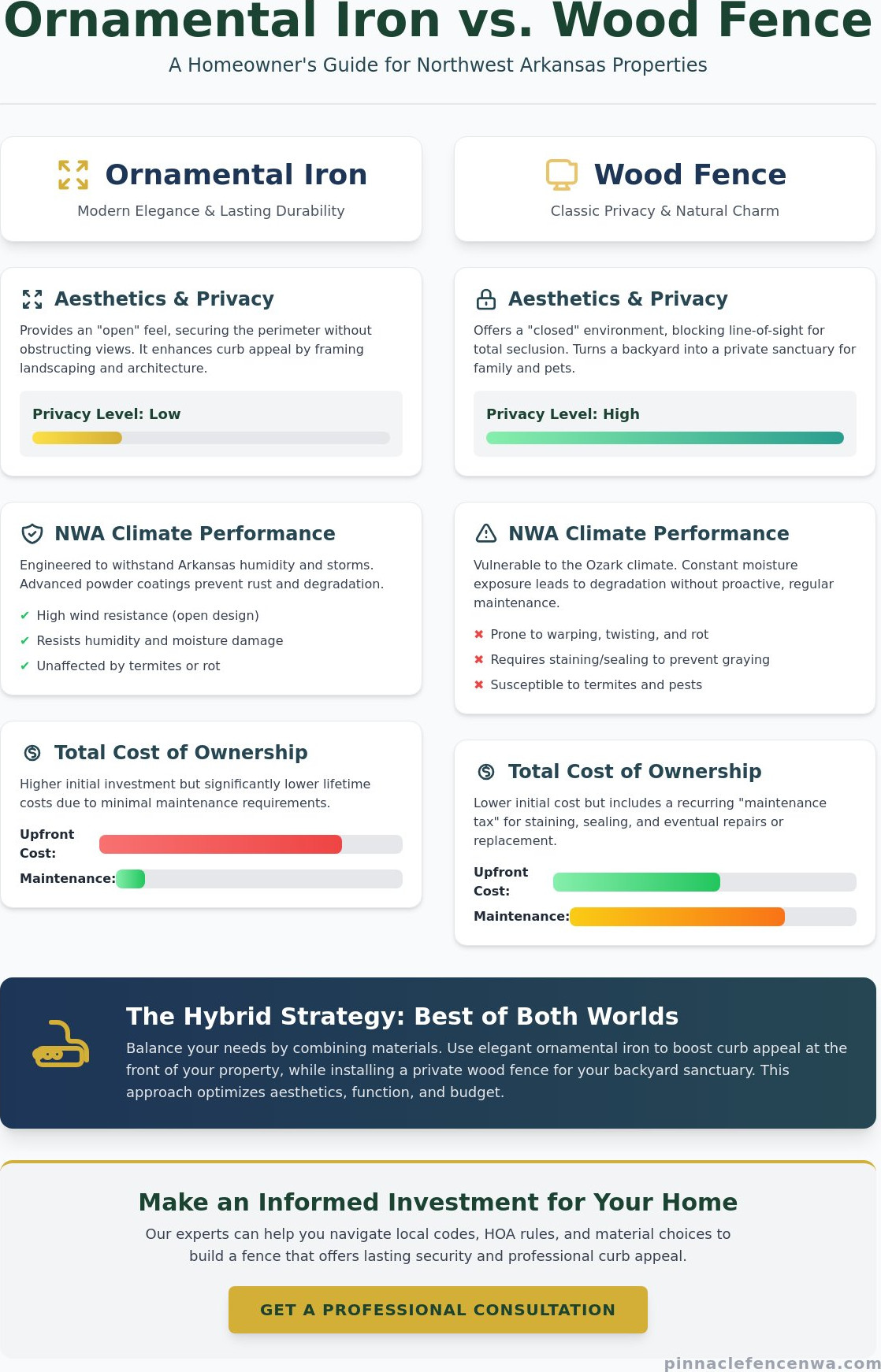
- Ornamental Iron: Provides an "open" feel. It secures the perimeter without obstructing views of your home's architecture or professional landscaping.
- Wood Fencing: Offers a "closed" environment. It blocks line-of-sight from neighbors and street traffic, turning a backyard into a private sanctuary.
The Aesthetic Impact on Curb Appeal
Ornamental iron acts as a high-end accent for your property. It enhances the visual appeal of stone work, manicured lawns, and intricate garden designs by framing them rather than hiding them. In many Northwest Arkansas neighborhoods, iron is associated with a sense of established luxury. Conversely, wood fencing offers a classic, rustic charm that fits perfectly in suburban developments. It provides a neutral, organic backdrop that complements the natural greenery of the Ozarks. Your choice of fence material acts as the frame for your property, immediately signaling either a commitment to traditional privacy or a preference for high-end architectural detail.
Privacy Levels and Boundary Definition
If your primary goal is backyard seclusion or noise reduction, wood is the superior choice. The solid panels dampen neighborhood sounds and prevent outsiders from seeing into your living space. This makes it ideal for families with children or pets who need a secure, private area to play without distractions. Ornamental iron is intentionally transparent. It defines boundaries clearly but doesn't isolate the property from the neighborhood. This visibility is often a significant safety benefit. For example, pool areas often require iron fencing because being able to see into the enclosure from the house is critical for supervision. It keeps the space secure while maintaining a sense of community connection.
Performance in the Northwest Arkansas Climate
Arkansas weather is unpredictable. High humidity in the summer and heavy rain in the spring create a challenging environment for any outdoor structure. When comparing an ornamental iron vs wood fence, you must consider how these local factors impact the material's lifespan. The Ozark region also features acidic soil. This acidity can accelerate the degradation of materials buried underground, making the choice of post material and installation method vital for long-term stability.
Wood Decay and Moisture Management
In Rogers and Lowell, wood fences face constant moisture exposure. Pressure-treated pine is a common choice for its affordability, but it's prone to warping and twisting as it cycles through saturation and drying. Western Red Cedar offers better natural resistance to rot, yet even high-quality cedar will eventually "gray" under the intense Arkansas sun without regular staining. Termites are another reality in the Southern United States. These pests thrive in our humid environment and can compromise the structural integrity of wood panels over time. When deciding on an ornamental iron vs wood fence, remember that wood requires proactive care to survive the Ozark elements. Professional installation is critical here to prevent ground-contact rot. You can find more details on how these variables influence the long-term fence construction costs in regional agricultural guides.
Iron Resilience and Modern Coatings
Ornamental iron is engineered to withstand the specific stressors of the NWA climate. Unlike the wrought iron of the past, modern ornamental steel utilizes advanced powder coating. This finish acts as a durable shield against the region's high humidity, preventing moisture from reaching the metal and causing rust. One of the biggest advantages during Arkansas spring storms is wind resistance. Solid wood panels act like sails, catching heavy gusts that can lean or snap posts during severe weather. Iron's open picket design allows wind to pass through freely. This reduces the physical strain on the structure and makes it an exceptionally durable choice for properties on hillsides or in open areas. If you're looking for a solution that stands up to the local elements, exploring professional installation options can help you secure your property for years to come.
Calculating the Total Cost of Ownership (TCO)
Financial decisions regarding your property shouldn't just focus on the first check you write. For many Northwest Arkansas homeowners, wood fencing is the most accessible entry point because of its lower initial material and labor costs. It's a practical choice for immediate budget management. However, a true comparison of an ornamental iron vs wood fence requires looking at the total cost over the next ten to fifteen years. High-quality ornamental iron is often viewed as a "set and forget" investment, while wood carries an ongoing "maintenance tax" that many owners overlook during the planning phase.
Upfront Investment vs. Long-Term Savings
The initial price difference usually stems from material manufacturing and the labor required for installation. Wood is relatively light and forgiving to work with, which can lead to faster project completion. Ornamental iron requires specialized handling and exact measurements to ensure the heavy panels align perfectly with the terrain. While you'll spend more on day one for iron, it's important to consider the lifecycle of the product. Over a ten-year period, the cumulative expense of professional staining and periodic board replacements often makes wood the more expensive choice for the property owner. Iron also tends to offer a higher return on investment; its durability and high-end aesthetic are significant selling points that can increase a home's resale value.
Maintenance Realities for NWA Homeowners
The climate in cities like Fayetteville and Bentonville dictates your maintenance schedule. Because of the local humidity, a wood fence typically requires re-staining or sealing every two to three years to prevent the fibers from graying or rotting. If you skip this step, the wood's lifespan drops significantly. Iron maintenance is far simpler. A quick rinse with a garden hose and mild soap once or twice a year is usually enough to maintain its factory luster for decades. You should also be aware of the hidden costs associated with each material:
- Wood: Frequent gate adjustments are necessary as the heavy wood panels sag or swell with the seasons. You'll also need to budget for replacing rusted or broken hardware over time.
- Iron: Modern coatings are extremely resilient, but you may occasionally need to touch up small scratches to prevent surface oxidation. The rigid structure means gates rarely require the same level of constant adjustment as wood.
Choosing the right material means balancing your current liquid budget against your future time and maintenance funds. If you prefer a lower upfront cost and don't mind the recurring labor, wood is an excellent solution. If you value a permanent fixture that enhances property value without a recurring "maintenance tax," ornamental iron is the superior long-term choice.
Functional Comparison: Security, Pets, and HOA Rules
Your daily experience with your property depends on how your fence functions as a tool for containment and protection. While style is important, the practical choice between an ornamental iron vs wood fence often involves local regulations and specific household needs. In Northwest Arkansas, master-planned communities in cities like Bentonville and Rogers frequently have strict standards. For example, Bentonville requires a $30 permit for most new fences, and several local HOAs mandate specific materials to maintain a cohesive neighborhood look. Understanding these rules before you build prevents costly compliance issues later.
Keeping Pets and Children Safe
Containment strategies differ significantly between these two materials. Wood fences provide a solid visual barrier, which is often the best solution for reactive dogs. It blocks the sight of passing cars or neighbors, reducing "fence fighting" and excessive barking. However, wood can be susceptible to digging or chewing at the base. Ornamental iron offers a different set of advantages. For homeowners with small breeds, "puppy picket" options are available. these feature narrower spacing at the bottom of the panel to prevent escape. Visibility is also a key safety factor for families with pools. Arkansas codes often favor iron for pool enclosures because it allows adults to maintain a clear line of sight into the water from the house while keeping the area secure.
Security and Access Control
When it comes to perimeter protection, iron is the clear winner for structural strength. It's difficult to climb, nearly impossible to breach without heavy equipment, and won't rot or weaken over time. Wood offers privacy, but it can be more vulnerable to forced entry or environmental wear that creates gaps. To maximize security, many NWA homeowners integrate automated iron gate systems into their design. These systems provide a rigid entry point that wood gates simply can't match in terms of longevity. You can further enhance this protection by adding keypad entry or automated openers, allowing you to control who enters your property without leaving your vehicle. This level of access control adds a layer of professional security that complements the high-end aesthetic of an iron installation.
- HOA Compliance: Many NWA neighborhoods require "finished side out" designs, a rule that applies to wood but is naturally satisfied by iron's double-sided finish.
- Height Restrictions: Most municipalities, including Fayetteville and Rogers, limit front yard fences to 4 feet in height.
- Visibility: Iron is often preferred on corner lots in Springdale to maintain clear sightlines for traffic safety.
Selecting the right material requires balancing your need for seclusion against your requirements for security and local code adherence. If you're ready to see how these options fit your specific lot, contact our team for a professional assessment of your property's needs.
Choosing the Right Fence for Your Arkansas Property
Selecting between an ornamental iron vs wood fence doesn't have to be an all-or-nothing decision. Many homeowners in Northwest Arkansas find success with a "Hybrid Solution." This strategy uses the prestigious, open look of ornamental iron for the front yard to enhance curb appeal and architectural detail. Meanwhile, wood fencing is installed along the side and rear perimeters to provide the total privacy required for backyard living. This approach allows you to balance your initial investment while meeting every functional goal for your property.
Every lot in the Ozarks presents unique challenges, from the rocky soil of Bentonville to the steep slopes found in Fayetteville. A professional site evaluation is the only way to ensure your fence remains stable over time. This process identifies potential drainage issues and determines the correct post-depth needed to handle the region's seasonal freeze-thaw cycles. At Pinnacle Fence and Outdoors, LLC, we prioritize this level of precision. We back our installations with a one-year warranty on craftsmanship, providing the peace of mind that your boundary is built to last.
When to Choose Wood
Wood is the primary choice for backyards where seclusion is the most important factor. It's the ideal material for blocking the view of close neighbors or dampening the sound of nearby traffic. If you're working with a strict immediate budget, wood offers a lower entry cost for securing large perimeters. We recommend using high-quality Western Red Cedar for its natural ability to resist rot in our humid climate. To ensure your project is executed correctly, our team provides expert wood fence installation NWA services tailored to your specific terrain and privacy needs.
When to Choose Ornamental Iron
Ornamental iron is the superior choice for homeowners seeking a permanent, zero-maintenance fixture. It's the standard for pool enclosures due to its safety and visibility benefits. Iron also provides a high-end look that never goes out of style. For those interested in custom iron fencing in Fayetteville AR, this material offers unmatched durability against heavy winds and soil acidity. Before requesting an estimate, use this final checklist to prepare:
- Verify your property lines with a professional survey to avoid neighbor disputes.
- Review your specific HOA bylaws for restrictions on picket spacing or fence height.
- Identify any utility easements that may require specific gate placements.
- Decide if your primary objective is visual privacy, perimeter security, or curb appeal.
By evaluating these factors, you can choose a material that fits your lifestyle and protects your property value for decades. Whether you prefer the natural warmth of wood or the lasting strength of iron, a professional installation ensures your home stays secure and looks its best.
Secure Your Northwest Arkansas Property with Confidence
Your property is a significant investment. Selecting the right boundary ensures it remains secure and aesthetically pleasing for years to come. Whether you prioritize the absolute privacy of wood or the maintenance-free elegance of iron, your decision should account for the unique Ozark climate. We've explored how soil acidity and humidity impact these materials differently over time. Making the right choice between an ornamental iron vs wood fence depends on balancing your immediate budget with your long-term maintenance goals.
At Pinnacle Fence, we bring over 30 years of local experience to every project. We understand the specific challenges of Northwest Arkansas terrain and soil conditions. This expertise allows us to provide a one-year craftsmanship warranty on every installation. Our team is ready to help you navigate HOA rules and city codes to find the perfect fit for your home. Get your free fencing estimate from Pinnacle Fence today! We look forward to helping you enhance your property with a solution that lasts.
Frequently Asked Questions
Is iron or wood fencing better for the Northwest Arkansas climate?
Ornamental iron is generally the superior choice for the Northwest Arkansas climate because it resists the region's high humidity and heavy spring rains. Wood is highly susceptible to moisture saturation, which can lead to warping, twisting, and fungal decay over time. Iron's open picket design also allows high Ozark winds to pass through freely, reducing the risk of structural failure during severe storms.
Which fence type is more expensive to install in Bentonville or Rogers?
Wood fencing is typically more affordable to install initially in Bentonville and Rogers compared to metal alternatives. The raw materials are less costly, and the installation process is generally faster and less labor-intensive. However, it's important to remember that wood requires recurring investments in stains and sealants that iron avoids. Over a decade, the total cost of ownership for wood often exceeds that of iron.
Do iron fences rust easily in high-humidity areas like the Ozarks?
Modern ornamental iron fences do not rust easily because they utilize advanced factory-applied powder coatings. These finishes are specifically engineered to provide a moisture-resistant barrier that protects the underlying steel from the Ozark humidity. Unlike traditional wrought iron that required constant maintenance, these modern systems remain rust-free for decades without the need for frequent painting or specialized chemical treatments.
Can I use an ornamental iron fence if I have a small dog?
You can effectively contain small pets with an ornamental iron fence by selecting a puppy picket or "short-space" design. These panels feature pickets that are spaced much closer together at the bottom of the fence to prevent small dogs from squeezing through. This option provides the same level of security as a solid wood barrier while maintaining the open, elegant aesthetic of an ornamental iron vs wood fence.
How long does a typical wood fence last in Arkansas compared to iron?
A well-maintained wood fence in Arkansas typically lasts between 10 and 15 years, while an ornamental iron fence can easily exceed 30 years. The intense UV exposure and high moisture levels in the Southern United States accelerate the natural breakdown of wood fibers. Iron's structural integrity is not compromised by these environmental factors, making it a much more durable long-term solution for local property owners.
Are there specific HOA rules in NWA that favor one material over the other?
Many homeowners associations in Northwest Arkansas mandate ornamental iron for front yards to maintain a high-end neighborhood appearance. Conversely, they often allow or require wood in backyards for privacy and noise reduction. Some communities in cities like Bentonville have strict "finished side out" rules for wood fences. You should always consult your specific HOA bylaws before finalizing your material choice to ensure full compliance.
Does a wood or iron fence add more value to my home's resale price?
Ornamental iron generally adds more to a home's resale value because it is perceived as a premium, low-maintenance upgrade. Prospective buyers often appreciate the longevity and curb appeal of metal fencing, which doesn't require the immediate upkeep of a weathered wood structure. While a ornamental iron vs wood fence both provide value, the permanence of iron often yields a better return on investment during a home sale.
Can I combine wood and iron for a custom look?
Combining wood and iron is a popular "hybrid" strategy that offers the best of both materials for your property. You can install ornamental iron along the front of your lot to highlight your home's architecture and use wood along the sides and back for maximum privacy. This custom approach allows you to manage your budget effectively while still achieving the specific security and aesthetic goals you have for your yard.